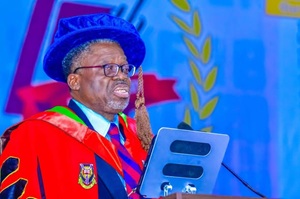
UI DON ADVOCATES THERAPEUTIC PHILOSOPHY AS A RESPONSE TO POVERTY OF THE MIND
A Professor of Epistemology and Philosophy of Science, Metaphysics and African Tradition of Philosophy, Professor Isaac Ehaleoye Ukpokolo, has advocated therapeutic philosophy as a response to poverty of the mind.
He made this advocacy while delivering the 608th Inaugural Lecture of the University of Ibadan on behalf of the Faculty of Arts.
The title of the lecture was: "Therapeutic Philosophy and Knowledge Discovery."
Professor Ukpokolo identified the cluster of problematics faced by human condition and summed them up in the expression “poverty of the mind”.
He clarified that poverty of the mind indicates the lack of certain forms of consciousness required for meaningful engagement with reality and enhancement of full humanity, which point to some intellectual and moral impoverishment that may lead to distorted ways of being in the world.
He explained that Therapeutic Philosophy (TP) responds to poverty of the mind, which stands in dire need of remedy, saying this assignment is executed by subjecting human essentialities and realities to interrogation, employing the precepts of critical thinking, ethical reflections, systematicity and historical consciousness.
The Inaugural Lecturer said these would drive the human faculties and subsequently the ‘being’ of the human in the bid to participate in the reality of person, which he described as the most perfect expression of being.
He posited that through knowledge, we are offered a remedy for the limitations and poverty of our being, saying that philosophy brings the therapeutic value of knowledge to bear on the various regions of the human condition.
The Don said the nature of therapeutic philosophy is an enduring human endeavour, which he described as the application of reason and wisdom to the art of living.
According to him, it does not seek to remove all pain or challenge from life but to transform our relationship with it, building a resilient, virtuous and meaningful existence from inside out.
The Professor of Epistemology restated that the call for therapeutic philosophy is imperative, given the prevalence of anxiety and fragmentation, stating that TP, when rightly understood is therapy.
He said that an understanding of the major characteristics of TP is aided by a consideration of its major characteristics, which distinguish it from other forms of therapy, and identified these characteristics as critical thinking, self-examination, principles of ethics, conception of reality, and goal-orientedness.
Professor Ukpokolo called for an advocacy against anti-intellectualism, saying that this would reduce resistance and opposition to the strength of reasoning, morality and exclusive dependence on pleasure, fun and other extra-rational considerations.
He recommended the establishment of philosophy clinics in all institutions, colleges and universities as therapy, adding that to combat corruption in the ‘being’ of the humans, philosophers will also be useful at Correctional Centres so that incarceration can be accompanied by a therapeutic spirit of philosophy, education in morality, sound reasoning and self-mastery.
He emphasized the need to draw a distinction between literacy and education, saying education enhances the liberation of the human person, whereas literacy does not necessarily include the totality of education.
Professor Ukpokolo advocated the inclusion of philosophy, particularly critical thinking and ethics in the secondary school curriculum, drawing a distinction between formation and production in the processes of knowledge transmission and acquisition. According to him, this will foster a more positive teacher-student interaction, which is more of a relationship than that of casualty.
He stressed that by engaging citizens in reasoned deliberation about their values, assumptions and choices, philosophy becomes a pragmatic tool for social healing and transformation as the discovery of knowledge is the acquisition of insight and understanding, which Philosophy employs in her task of therapy.
The Inaugural Lecture was the fifth in the series for the 2025/2026 academic session.